
BEFORE THE VISIT
How to Prepare for a Crawl Space Inspection
A six-step homeowner checklist for records, safe access, useful questions, and clear next steps before a professional visit.
Updated October 6, 2026. To prepare for a crawl space inspection, confirm the visit's scope, gather existing records, describe what changed, and make the route to the access point available. You do not need to crawl under the house yourself.
This guide focuses on getting ready for the appointment and understanding the next steps. For the conditions a professional may document, use our crawl space inspection checklist.
Prepare for a crawl space inspection in six steps
Use this quick overview before the visit, then work through the questions below. The goal is a clear record of what was inspected, what remains unknown, and what action is justified.
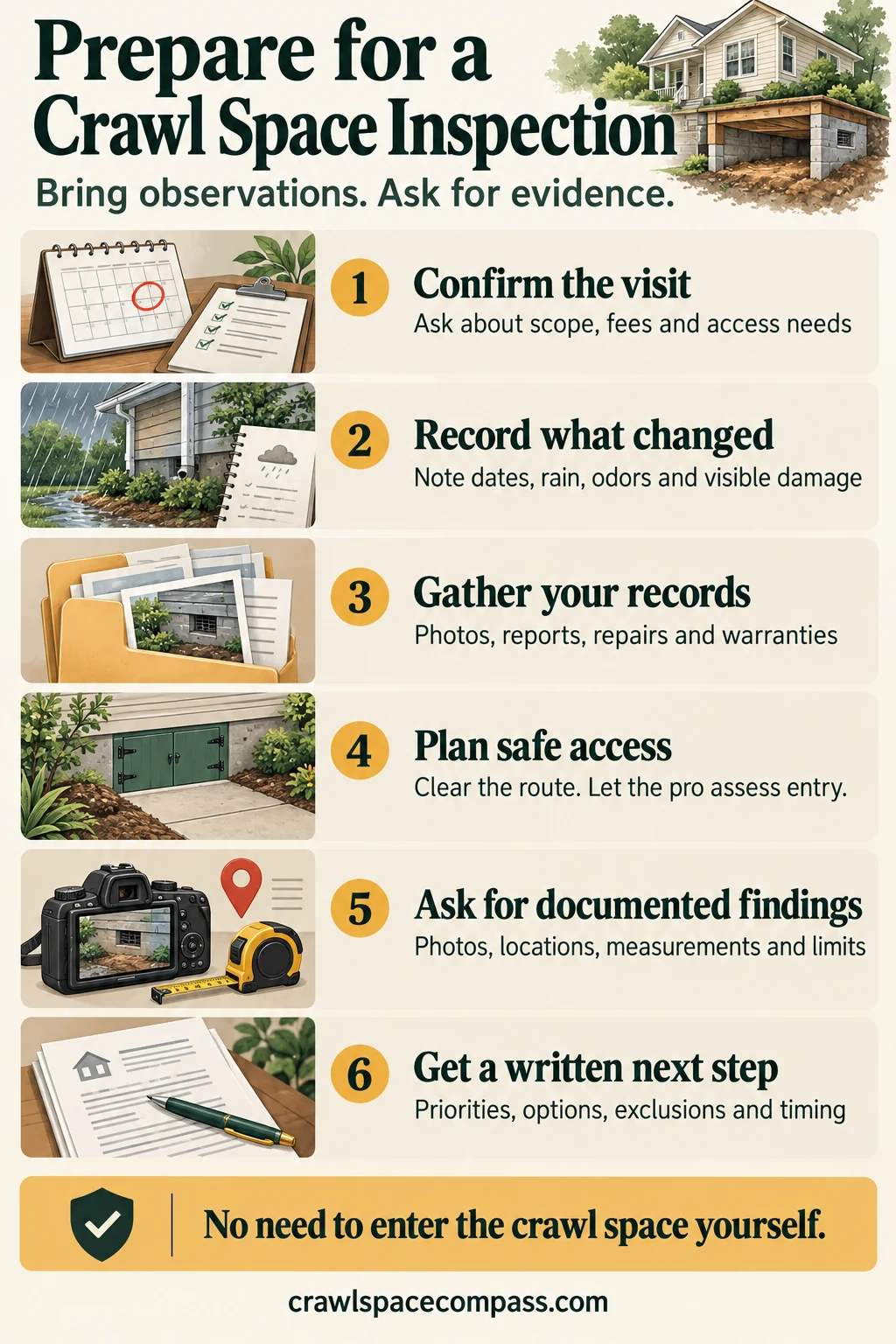
Text version of the six-step preparation checklist
- Confirm the visit: ask about scope, fees, and access needs.
- Record what changed: note dates, rain, odors, and visible damage.
- Gather your records: photos, reports, repairs, and warranties.
- Plan safe access: clear the route and let the professional assess entry.
- Ask for documented findings: photos, locations, measurements, and inspection limits.
- Get a written next step: priorities, options, exclusions, and timing.
You do not need to enter the crawl space yourself.
1. Confirm the inspection scope before the visit
Ask whether you are booking a general home inspection, a crawl-space repair estimate, or a specialist assessment. These appointments can answer different questions. A repair estimate may focus on the services that company offers. An engineering, plumbing, pest, or mold assessment may require a separate appointment.
- What areas and systems will you evaluate, and what is excluded?
- Is there a fee? What report or written findings will I receive?
- Who will attend, and should I be available for a walkthrough afterward?
- What access, permissions, or preparation do you need before arrival?
- When should I expect the report or estimate?
For context, the ASHI Standard of Practice describes a visual inspection of accessible systems and a written report identifying relevant limitations. It does not make every visit a technically exhaustive investigation. Ask which standard and agreement apply to your appointment.
2. Write down what changed
Record when you first noticed the issue, whether it follows rain or seasonal changes, and any recent plumbing, drainage, or home improvement work. Describe what you observed without trying to diagnose it. A dated note about water after a storm is more useful than assuming the home needs a particular product.
Make a short observation log from places you can safely access:
- When: first noticed, most recent occurrence, and whether it is recurring.
- Where: room above the concern, outside wall, downspout, or known access point.
- What: an odor, stain, visible water, floor change, or equipment alarm.
- Conditions: recent rain, an appliance leak, plumbing work, or a change in equipment operation.
- Evidence: existing photos, a brief video, prior measurements, or earlier reports.
Label observations as observations. An odor or stain alone does not establish a cause. If moisture is the concern, UGA Extension's moisture checklist explains why the surrounding home and exterior drainage deserve attention too. Its safety caution is important: disturbing suspected contamination can spread it.
3. Gather existing records
Put relevant documents in one folder so you can refer to them during the visit. You can prepare for a crawl space inspection with what you already have; missing paperwork is something to mention, not a reason to invent a repair history.
- Previous home, crawl-space, pest, or structural inspection reports
- Repair invoices and the written scope of previous work
- Applicable warranties and maintenance records
- Drainage, sump-pump, dehumidifier, or encapsulation installation details
- Photos showing earlier conditions and any known changes since then
Tell the professional which records you have and which details are uncertain. Share only the relevant pages; unrelated financial, identity, or personal information does not help explain a moisture or repair concern.
4. Plan safe access without entering the crawl space
Tell the company where the hatch is and mention locks, gates, pets, stored items, low clearances, or other known obstacles. Move ordinary belongings away from the route only where you can do so safely. Ask the professional to assess the entry and conditions before going inside.
Do not enter standing water, disturb suspected mold or damaged materials, or approach exposed wiring to prepare for an appointment. Tell the company about known hazards. An active leak or unsafe condition needs appropriate professional attention; do not wait for a routine visit merely to preserve the scene.
Bring existing photos if they are available, but do not disturb materials for better pictures. The EPA's mold and moisture guide cautions that investigating hidden mold can release spores and recommends experienced help when hidden contamination is suspected.
5. Ask for documented findings and inspection limits
Ask the professional to connect each important finding to a location and evidence. Useful documentation might include photos, notes, or measurements when those are part of the agreed scope. A reading should identify what was measured, where, and under what conditions.
- Which areas were inspected, and how were they accessed?
- Which areas or components were not inspected, and why?
- What did you directly observe, and what remains a possible explanation?
- What evidence supports each recommended repair?
- Does anything need a separate specialist or further evaluation?
Keep the report and the proposed repair scope together. If an area was inaccessible, ask what would be needed to assess it safely. An uninspected area is an unresolved limitation, so avoid treating the rest of the report as confirmation that everything beneath the home is sound.
6. Leave with a written next step
Before the visit ends, ask which issues need prompt attention, which can be monitored, and what information is still missing. Request a written scope that separates proposed work, options, exclusions, and any further investigation. You do not need to agree to a repair during the first visit.
If repairs are proposed, use our crawl space quote comparison guide to compare the same scope across bids. Ask who will confirm any permit and inspection requirements for the actual work. For framing or foundation concerns, the structural repair guide helps you frame questions about assessment and repair design.
Common inspection preparation questions
Should I clean the crawl space before an inspection?
Ask the company what preparation it needs. Clear the safe route to the access point, but do not enter or disturb suspicious materials simply to make the area look better. Describe known problems and prior work honestly. Active hazards still need appropriate attention.
What if the inspector cannot enter?
Ask the report to explain the access limitation, the areas left uninspected, and any alternative observation method used. Confirm whether another visit or specialist is needed. A view through the opening may leave important areas unseen.
What should I have after the appointment?
You should understand what was examined, the documented concerns, unresolved questions, and the agreed next step. Confirm the report's delivery date and how to ask follow-up questions. If you are collecting repair estimates, browse the contractor directory and confirm each company's services and coverage directly.
This is general homeowner preparation guidance. Inspection scope, access decisions, and recommended work depend on the property and the professional's agreement.
Your next step starts here