Norfolk Crawl Space Mosquitoes: Report Water and Plan Repairs
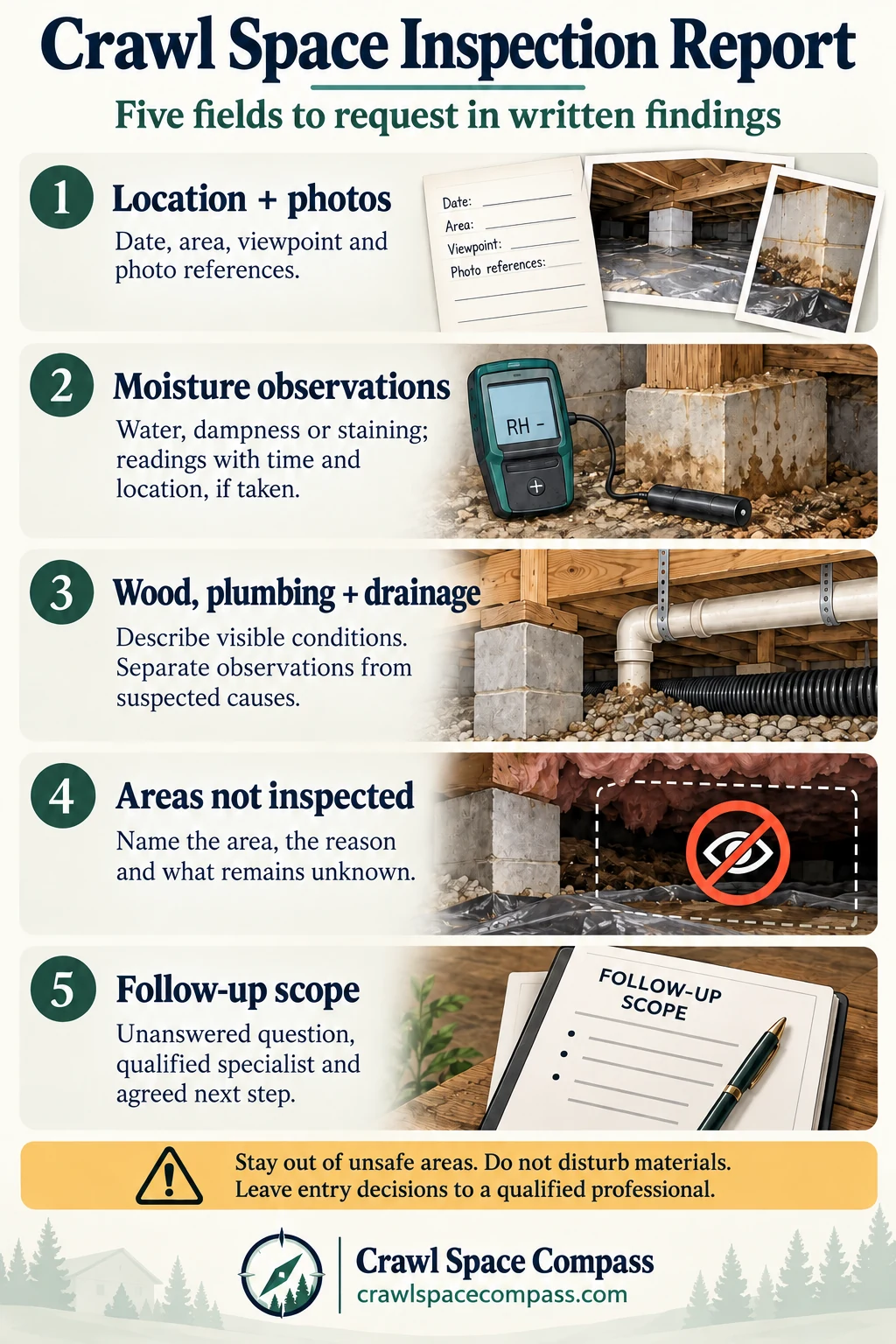
If mosquitoes are appearing around a Norfolk crawl-space entrance and standing water is suspected below the house, report the mosquito concern and arrange a safe water-source assessment before choosing treatment or enclosure work. Record where insects and water were actually observed. A useful plan assigns the pest investigation, water repair and follow-up to named people. This guide covers planning for homes in the City of Norfolk, Virginia. Do not enter a wet or otherwise unsafe crawl space to collect insects, inspect wiring or take photographs. Ask the inspecting professional to document inaccessible areas.Separate insect sightings from a confirmed breeding site
Virginia Cooperative Extension's mosquito guidance describes larvae developing in still water, including small containers and sheets of plastic that hold water. That makes a water pocket worth reporting, but an adult mosquito near a crawl-space door does not establish where it developed. Describe what you know: insects near the entrance, insects seen indoors, water photographed by an inspector, or a persistent wet area outside. Keep those observations separate. If the insect identity is uncertain, ask for identification before paying for a species-specific treatment. Photographs taken safely can help the professional decide what further inspection is needed. For example, a report that says “small flying insects near the rear access door after rain” is more useful than a diagnosis of “mosquito infestation under the whole house” without an inspection. Record the date, exact location and whether the same condition has returned.Use Norfolk's mosquito-reporting route
The Norfolk Health Department's Vector Control page links to MyNorfolk for mosquito reports. It describes year-round surveillance, larval surveys and adult trapping. Follow the current linked reporting instructions and explain that the suspected water is beneath a house or beside its foundation. Give the address, observation dates, safe photographs already available and any access limitations. Ask what information the team needs and whether the concern should also go to another city department. Keep the service-request number and the response with the property records. The page does not promise that every report produces a particular treatment, private-property repair or appointment time. If the water appears associated with a public ditch or drainage structure, include its location in the report. Do not enter or alter that structure yourself. A mosquito report and a building-repair proposal may need separate follow-up.Use the city's data as context
Norfolk's Mosquito Surveillance and Control Data Story describes trap records spanning 2015–2026 and explains that different traps collect different mosquito groups. The health department also links to a fogging map. These resources help explain how the city selects control activities. A nearby trap record or mapped treatment area is not an inspection of your crawl space. Check dates and map descriptions, and ask Vector Control how the information relates to your report. This guide makes no claim about current disease activity, a scheduled spray at your address or the source of an individual insect.Ask for a water plan and a mosquito plan
The U.S. Department of Energy's crawl-space assessment guidance calls for investigating and correcting standing-water sources before air-sealing and insulation renovations. Its examples include plumbing leaks, equipment condensate and outside water. Have the appropriate professional investigate the source at your property rather than assuming every wet area needs the same drain. Use these two separate work descriptions when comparing proposals:- Water investigation and repair: Which source is confirmed? What evidence supports it? Who handles a plumbing or equipment defect if the crawl-space crew does not? What remains uninspected?
- Mosquito assessment and control: Who identifies the insects and checks potential breeding sites? What response is recommended for the findings? Who returns to assess whether the problem persists?