
Mecklenburg County Crawl Space Work on Septic Lots
If your Mecklenburg County home uses a septic system, locate its components and repair area before approving crawl space drainage or encapsulation work. The project needs an equipment-access plan and a verified destination for collected water. A route that gets water away from the foundation can still conflict with the land your septic system depends on.
This guide applies to properties served by onsite wastewater systems in Mecklenburg County, North Carolina. Confirm your home's actual sewer or septic arrangement first. A Charlotte-area mailing address does not establish which system is in use or where older buried components remain.
Get the county septic records before the site visit
Mecklenburg County's Groundwater and Wastewater Services page links to septic permit records, contractor-registration resources and homeowner guidance. Start with the official well and septic record search. Its instructions say to search one field at a time; a partial address between asterisks can help locate matching records. Contact the county if records cannot be found.
Request the permit and available layout records before a contractor commits to a trench or discharge route. Ask the owner or seller for later repair records too. Put the documents alongside the crawl-space inspection report so the people planning inside and outside work are working from the same information.
NC State Extension's Septic System Owner's Guide explains that permit and soil-evaluation records indicate approximate component locations. Have a septic professional or the county help resolve unclear locations. An old sketch is useful planning evidence; it should not be treated as an exact excavation mark.
Include the repair area in the work plan
A septic plan can identify land reserved for a replacement drainfield, even where no working pipes are currently visible. NC State's owner's guide explains the purpose of this repair area and the need to protect it from excavation and soil disturbance. Ask whether your property has a designated area and have it identified before exterior work is laid out.
Have the crawl-space contractor show proposed trenches, discharge piping, material storage and equipment travel on the same sketch as the septic layout. Ask where excavated soil will be placed. A short route across apparently unused lawn needs review if that lawn is reserved for future wastewater treatment.
Also document the crawl-space access opening, tank service access and any area that another trade needs to reach. Work sequencing matters: the easiest staging location for an encapsulation crew may be in the way of septic maintenance or a later inspection.
Check both the pipe connection and where water lands
The NC Department of Health and Human Services' septic protection guidance cautions against directing sump-pump water, HVAC condensate, downspouts and similar discharges into a septic system or toward its drainfield. NC State's septic failure guidance also identifies dehumidifier drainage into the septic tank as a source of excess water.
Ask for a separate destination for every proposed drain: the crawl-space sump, dehumidifier and HVAC equipment may have different routing requirements. Have the contractor and appropriate local officials confirm the design for this property. Do not assume an existing pipe is an acceptable connection simply because it is nearby.
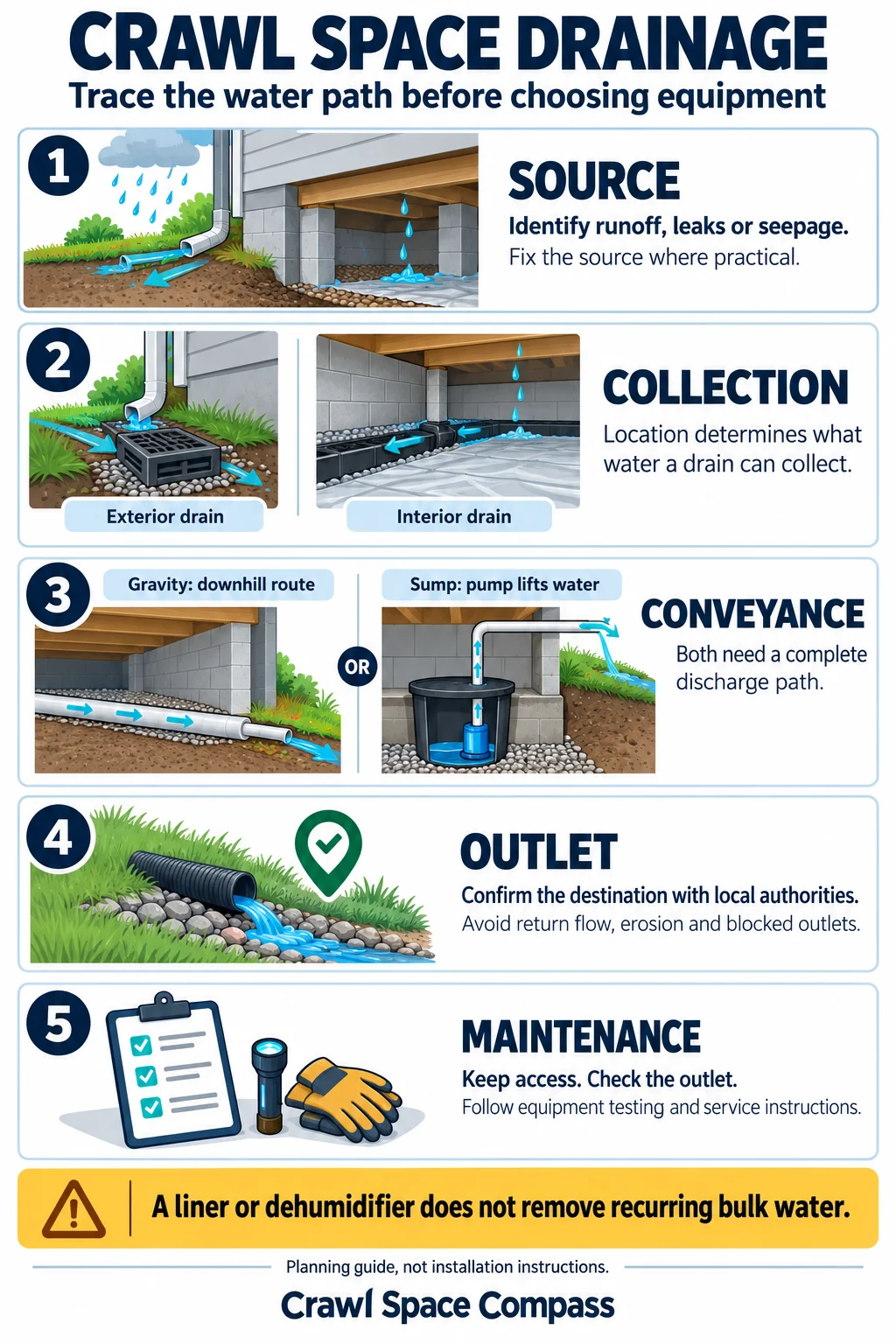
Trace the full sequence from water source to collection, conveyance, outlet and maintenance access. Then ask the bidder to explain what happens after water leaves the outlet. An endpoint beside the house and a route beyond it are different things. Our crawl space drainage guide can help organize that discussion.
Agree on crew access and ground protection
NC State Extension warns that heavy equipment can compact soil and damage septic components. Put equipment access into the proposal before a delivery truck or excavator arrives. Require the crew to use the agreed route and pause if field conditions do not match the plan.
Ask who will brief subcontractors and delivery drivers. Have the contractor identify where bags, drainage stone, removed insulation and spoil will be staged. Do not improvise a crossing over the septic system with boards or assume a smaller machine is acceptable without site-specific advice.
Take dated exterior photographs from safe ground before work begins. At handoff, compare the actual pipe route and disturbed areas with the agreed sketch. Keep any approved changes with the permit records so future maintenance crews know what was installed.
Separate septic review from crawl-space approvals
The county's septic services schedule lists repairs, alterations and modified plot plans as activities requiring permits. If the crawl-space proposal affects a septic component or the approved layout, ask Groundwater and Wastewater Services what review is needed before work proceeds.
Building, electrical, mechanical or other parts of the crawl-space project may need their own review. Use Mecklenburg County Code Enforcement's permitting information to confirm the route for the actual scope. Write down which contractor obtains each applicable approval, who requests inspections and when work must remain exposed. A septic approval does not answer every building or trade question.
Pause ordinary drainage work when sewage is suspected
State health guidance identifies sewage backup, raw-sewage odor with soggy ground and septic pump alarms as warning signs needing attention. Keep people and pets away from suspected contaminated areas and contact the county or a qualified septic professional. Never enter a septic tank.
Tell the crawl-space bidder about these observations before a routine water-removal proposal is prepared. Ask who will determine whether contaminated water is involved and what cleanup or repairs are needed. A new liner should not become the step that hides an unresolved wastewater problem.
Compare crawl-space proposals with the septic plan attached
For crawl-space scope discussions, existing directory profiles include Moisture Loc, Inc. in Charlotte and RJ Ward Crawl Professionals, LLC in Huntersville. Confirm current coverage and services. These listings do not establish septic-system credentials; use the county's linked registration resources when septic work is involved.
Before choosing a proposal, get written answers to five questions: Which records were reviewed? Who confirmed the septic locations? Where will each drain discharge? How will crews avoid protected areas? What approvals and completion records are included? Those answers make the outside consequences of an under-house project easier to compare.
Source review: October 14, 2026. This is a planning guide. Existing-system conditions, permit records and the relevant authorities determine the requirements for an individual property.