
Water in Crawl Space After Rain
Last reviewed: October 6, 2026
What to do about water in a crawl space after rain
Water in a crawl space after rain needs a source diagnosis before a liner or humidity-control system is chosen. Start with safety, then check roof runoff, downspouts, grade and surface flow from safe ground. Have a qualified professional investigate foundation entry or groundwater and decide whether interior collection is needed. Control active water entry before long-term vapor and humidity work.
First 24 hours: safety before photos
Stay out of standing water and do not enter a crawl space with electrical, structural or contamination hazards. Do not touch wet electrical equipment or enter water to reach a switch. Arrange qualified help; CDC warns against operating electrical equipment or power controls while standing in water. If supports appear damaged or unstable, keep out until a qualified professional confirms it is safe.
From a safe place, record when the water appeared and what weather preceded it. Photograph exterior runoff only when conditions allow. Ask the inspector for interior photos, water-depth observations and affected locations rather than entering to collect them yourself. Use our crawl-space inspection checklist for a consistent record.
Arrange prompt water removal and drying once hazards have been assessed. EPA recommends drying wet materials within 24–48 hours when possible; that is a prevention goal, not a reason to rush into an unsafe space or proof that mold is absent. For suspected contamination or damaged materials, see our crawl-space mold guide.
After-rain inspection flowchart
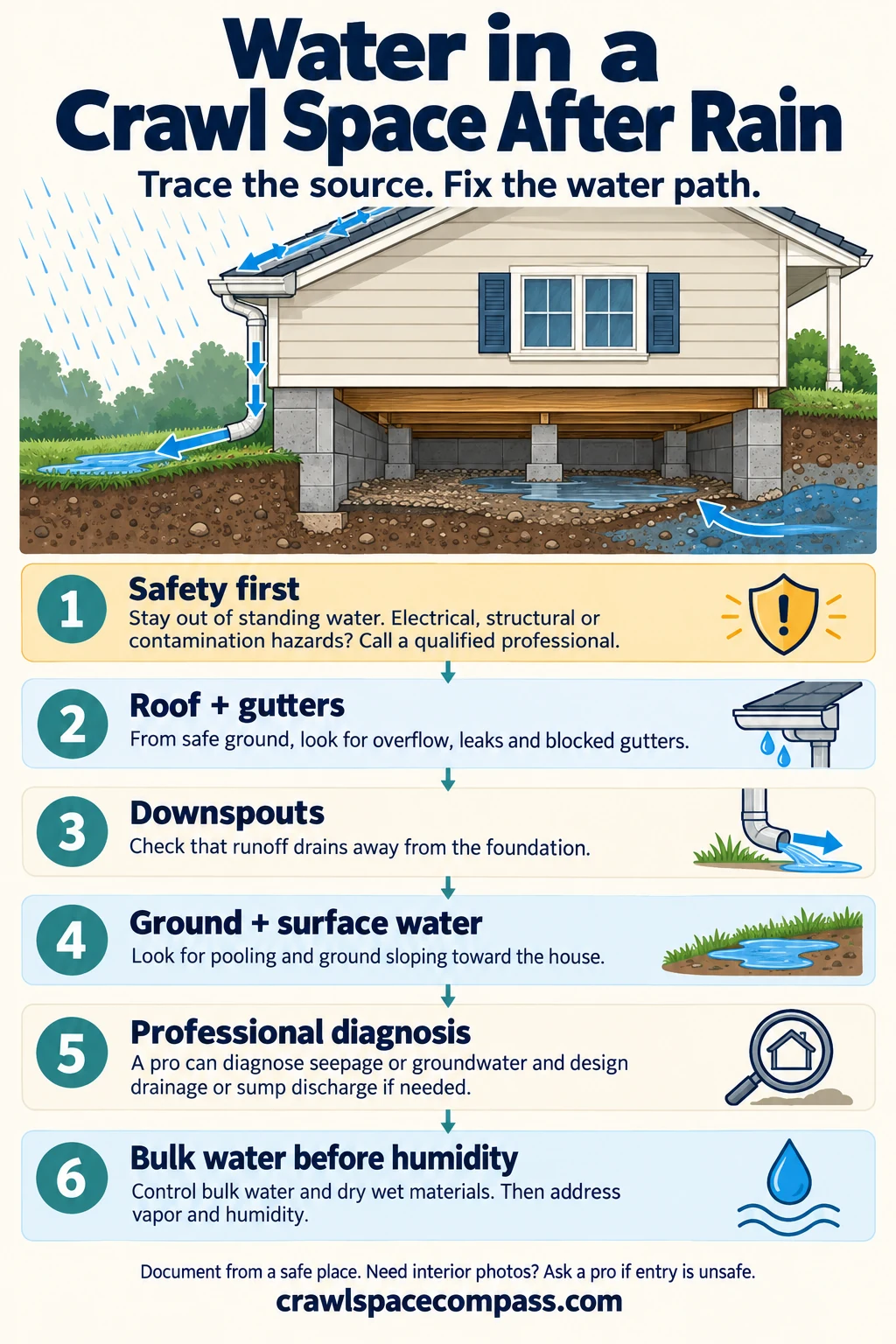
Read the flowchart as text
Trace the source. Fix the water path.
- Safety first: Stay out of standing water. Electrical, structural or contamination hazards? Call a qualified professional.
- Roof + gutters: From safe ground, look for overflow, leaks and blocked gutters.
- Downspouts: Check that runoff drains away from the foundation.
- Ground + surface water: Look for pooling and ground sloping toward the house.
- Professional diagnosis: A pro can diagnose seepage or groundwater and design drainage or sump discharge if needed.
- Bulk water before humidity: Control bulk water and dry wet materials. Then address vapor and humidity.
Document from a safe place. Need interior photos? Ask a pro if entry is unsafe.
The house cutaway shows rain moving down the left roof into a gutter, down a downspout and away from the foundation over outward-sloping ground. On the lower right, an underground arrow points toward the crawl space to illustrate possible groundwater seepage. Water is shown on the crawl-space floor. The illustration is diagnostic, not a construction specification. No people or electrical equipment are depicted.
Start outside
EPA recommends keeping gutters in repair and making sure the ground slopes away from the foundation. UGA's homeowner checklist similarly emphasizes gutters, downspouts, pooling and grade. Those are high-value first checks because they can reveal a water source before interior work begins.
Downspouts and grade
Water discharging next to the foundation or running toward the house can overwhelm otherwise adequate crawl-space moisture controls. Extend or route roof water appropriately for the site and correct obvious low spots or reverse grade where feasible.
Foundation and groundwater
Water can also enter through foundation penetrations, wall/floor joints, cracks or high groundwater. Those conditions need property-specific diagnosis. A drain or sump should be selected for the identified water source and site conditions; neither is a universal fix.
Interior drains and sump pumps
Interior collection systems can be appropriate when water reaches the crawl and needs a controlled route out. The quote should explain where the water is collected, how it reaches the sump or outlet, where it discharges and what happens during a power outage. Our guide to comparing crawl-space quotes helps you separate drainage, sump equipment, cleanup and humidity-control costs. Compare exterior drains, interior drains and sump pumps, then use our drainage contractor checklist to prepare for the site visit.
Where encapsulation fits
Once active water entry is controlled, a ground vapor retarder or closed-crawl system can address soil vapor and air humidity. A liner can hide wet soil visually, so it should never be used as proof that the water problem is solved. See encapsulation versus a vapor barrier to understand which components a proposed system includes.
Keep a rain-event record for the inspection
Use the same observations for each storm and each contractor. Leave an unknown answer blank; do not enter an unsafe area to fill a gap.
- Timing: note the date, approximate rain start and stop, and when water was first noticed.
- Location: identify the side or corner of the house. Keep photos labeled so outside runoff can be compared with the inspector's interior findings.
- Duration: record whether water remains after the rain stops, based only on safe observations or professional reports.
- Outside clues: document gutter overflow, disconnected downspouts, pooling, and visible flow toward the foundation from safe ground.
- Previous work: list known drain, sump, gutter, plumbing or grading repairs and any change in the water pattern.
A useful inspection connects the proposed work to this evidence. Ask which water source was identified, what remains uncertain, where collected water would discharge, and how the result will be checked after later rain. A dry day or a new liner alone cannot establish that the water-entry problem is resolved.
Agree on the after-rain follow-up before choosing a quote
Ask each bidder to describe the follow-up in writing, then keep the agreed plan with the completion record. A useful handover answers three questions:
- What was completed? Keep the work description, completion date and contractor's photos together. Ask which conditions or unresolved questions still need review.
- What has been checked? Record installation checks separately from observations after rain. If relevant wet weather has not occurred, note “wet-weather performance not yet observed.” Ask the contractor which weather conditions and observations would help assess the original problem.
- Who handles the follow-up? Identify the contact for renewed water, who would revisit, what the visit includes, any charge, and which maintenance tasks belong to the homeowner.
After later rain, reuse your rain-event record. Compare the same locations and note differences in rainfall duration, timing and visible runoff. Use safe exterior observations and the contractor's interior findings; do not enter standing water or an unsafe crawl space to complete the record.
If water returns, send the record and available photos promptly to the contractor responsible for the relevant work. Ask them to reassess the source and explain the next step. Describe what changed without assuming the cause or that a particular component failed. Do not postpone urgent qualified help while waiting for a routine follow-up.
For mold cleanup, EPA's homeowner guide calls for correcting the moisture problem and revisiting the affected area shortly afterward for signs of water damage or mold. The follow-up plan above is an original homeowner decision aid, not an EPA drainage test or a guarantee against future water. Compare these responsibilities alongside scope and exclusions in our quote comparison guide.
This follow-up section was source-checked October 12, 2026.
Common questions about rainwater
Why only after heavy rain?
That pattern often points to roof runoff, saturated soil, surface flow, foundation leakage or groundwater rather than everyday humidity. Document the timing and location so the contractor can trace the water path.
Is a sump pump enough?
Sometimes, but only if the water is already entering the crawl and interior collection is the appropriate strategy. A sump does not fix overflowing gutters, reverse grade or every groundwater condition.
Does encapsulation waterproof a crawl?
No. Encapsulation controls ground vapor and air exchange. It can be part of a dry crawl-space system, but it should not be described as floodproofing or a universal substitute for drainage.
How far should downspouts discharge?
The correct distance is property-specific, but the principle is to discharge roof water far enough from the foundation that it does not flow back toward the house. UGA's checklist suggests 6–10 feet as a homeowner inspection benchmark.
Could groundwater be the problem?
Yes. Water can rise or move through soil independently of surface runoff. Persistent water that does not track obvious roof or grading issues may need a professional drainage evaluation. You can browse contractors listing drainage services; confirm their service area, qualifications and proposed scope directly.
What should I photograph?
Photograph gutters, downspouts, low areas and visible flow paths from safe ground. Ask a qualified inspector for interior photos showing water-entry points, affected walls or piers, and existing drains or sumps. Do not enter standing water or an unsafe crawl space for a photo.
When should I call a professional?
Call promptly when water is recurring, spreading, affecting materials or coming from an unclear source. Electrical hazards, suspected sewage or contamination, and unstable supports need qualified assessment before entry or cleanup. A drainage proposal should explain the diagnosed source and site-specific discharge plan, rather than simply recommend a sump or dehumidifier for every wet crawl space.
Sources and methodology
Reviewed October 6, 2026. This guide draws on the following government and university resources. The outside-in flowchart, rain-event record and quote questions are original homeowner decision aids based on these sources, not a diagnosis or construction design for an individual property.
- EPA: A Brief Guide to Mold, Moisture and Your Home — prompt drying, gutter maintenance and ground sloping away from foundations.
- University of Georgia Extension: Mold and Moisture Home Inspection Checklist — exterior drainage checks and the 6–10-foot downspout inspection benchmark.
- NC State Extension: Keeping Your Home Dry — moisture sources, grading, gutters and ground covers.
- U.S. Department of Energy: Crawlspace Capillary Break at Crawlspace Floors — soil moisture, ground covers and separate bulk-water controls.
- DOE Building America Solution Center: Water Management of Existing Crawlspace Floor — manage bulk water before enclosure and choose drainage measures for site conditions.
- CDC: Reentering Your Flooded Home — electrical and standing-water safety.
- EPA: Coming Home — structural concerns and safe-entry precautions after flooding.