
Crawl Space Smells Musty: Causes and Fixes
Last reviewed: October 6, 2026.
A musty crawl space smell is a reason to investigate moisture and affected materials, but smell alone cannot identify the cause. Check the timing, water pathways, plumbing and HVAC connection before choosing a treatment. The useful sequence is to find the source, correct it, address contaminated or damaged materials, and verify that the problem stays resolved.
This guide helps you decide what to document and whom to call. For confirmed or suspected mold cleanup, use the separate crawl-space mold guide.
First, separate mustiness from an urgent odor problem
If you suspect a gas leak, leave the building immediately and call 911 and your gas utility from a safe location. Do not go into the crawl space to locate it or operate switches, appliances or phones near the suspected leak. A sulfur or rotten-egg smell should not be assumed to be a drain problem. See PHMSA's emergency guidance and Dominion Energy's gas-safety instructions.
For ordinary investigation, stay out if there is standing water near electrical equipment, exposed wiring, suspected sewage, unstable framing or inadequate access. Ask a qualified professional to inspect. DOE's pre-retrofit assessment guidance treats electrical hazards, water, structural damage and hazardous materials as issues to resolve before work proceeds.
If anyone has symptoms they think may be related to the home, discuss them with a healthcare professional. An odor inspection cannot diagnose a medical condition or establish a safe exposure level.
Musty crawl space smell: five steps before buying a fix
Use this visual to organize the next conversation with a professional. It is a planning sequence, not permission to enter a crawl space, identify a contaminant by smell or attempt cleanup.
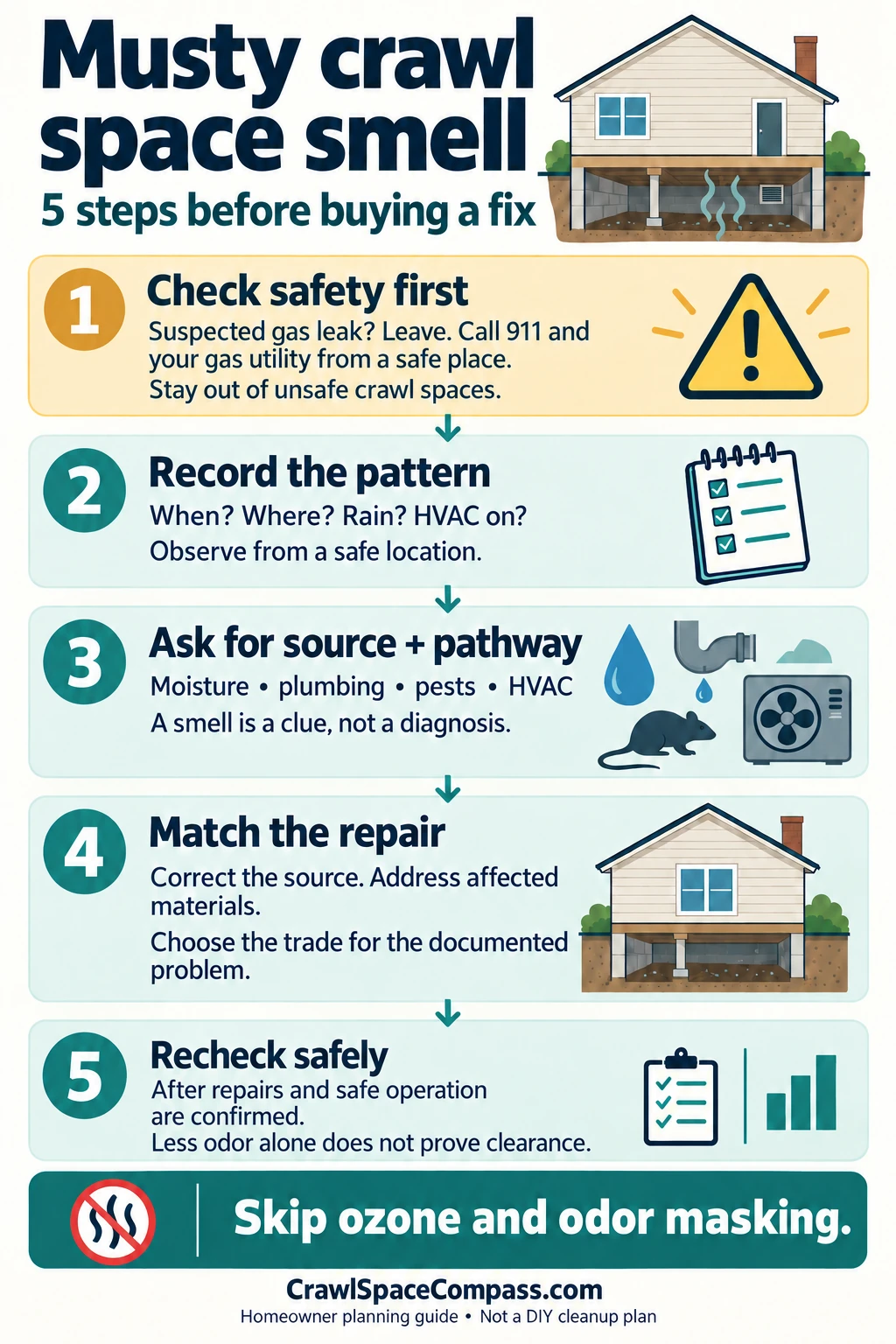
Read the five-step infographic as text
- Check safety first. Suspected gas leak? Leave. Call 911 and your gas utility from a safe place. Stay out of unsafe crawl spaces.
- Record the pattern. When? Where? Rain? HVAC on? Observe from a safe location.
- Ask for source and pathway. Moisture, plumbing, pests and HVAC are investigation categories. A smell is a clue, not a diagnosis.
- Match the repair. Correct the source and address affected materials. Choose the trade for the documented problem.
- Recheck safely. Recheck only after repairs and safe operation are confirmed. Less odor alone does not prove clearance.
Skip ozone and odor masking. This is a homeowner planning guide, not a DIY cleanup plan.
Record the musty crawl space smell before the visit
A short observation log helps the inspector understand the pattern. These patterns suggest questions to investigate; none confirms a diagnosis:
- After rain: ask about runoff, foundation entry points, drainage and new wet areas.
- During humid weather: ask about crawl-space humidity, ground coverage and cold surfaces collecting moisture.
- When cooling or the blower runs: ask HVAC to inspect the air handler, condensate system and ducts, including possible air leaks.
- Near one bathroom or pipe route: ask a plumber to check the supply and waste piping.
- Near a localized nest or animal remains: arrange appropriate pest or wildlife assistance and safe cleanup.
- After recent crawl-space work: record the products used, work dates and when the odor began. Ask the installer to investigate rather than assuming the smell is harmless or permanent.
Record the rooms affected, weather, HVAC operation and whether the odor is constant or intermittent. Share photographs taken from a safe location. Do not pull insulation down or open concealed cavities just to look for the source.
A short odor log you can copy
- Date, time and location: Where did you notice the odor from a safe, normally occupied area?
- Conditions: Recent rain, humid weather and whether heating, cooling or the fan was already running.
- What changed: New leaks, a plumbing event, pest activity or recent work, if already known.
- Existing evidence: Safe photos, earlier inspection findings, temperature and humidity records, and repair dates.
- Follow-up: Who was contacted, what was inspected and which questions remain unanswered?
Record observations as they occur. Do not deliberately reproduce a hazardous condition or switch equipment on to test a smell. The inspection preparation guide explains how to organize access information and records before the visit.
Trace moisture before choosing a deodorizer
EPA's mold course identifies bare crawl-space soil and high humidity as possible moisture sources and notes that hidden mold can be suspected when a building smells moldy. An inspection should establish where moisture is coming from, not just record that the air feels damp.
Ask the inspector to distinguish liquid water from water vapor. A plumbing leak or rainwater entry needs a different correction from humid air reaching cold surfaces. Look for documented findings around the access opening, perimeter walls, pipe routes, equipment and any low spots.
Temperature and relative-humidity measurements add context, particularly when recorded over changing conditions. One dry reading after several sunny days does not explain a smell that appears after storms. Use the humidity guide for measurement guidance and the inspection checklist to organize findings.
Check the pathway when the smell reaches the house
Tell the inspector whether the odor stays near the crawl-space opening or is noticeable in living areas. Ask for separate findings on the source and the route by which air may travel. EPA's mold course notes that crawl-space moisture can move into other parts of a building through openings.
If the smell tracks HVAC operation, request an HVAC assessment rather than purchasing duct cleaning solely on the basis of odor. EPA's air-duct guidance recommends cleaning when warranted by conditions, not as a routine cure. Ask the technician to show the affected component and explain the proposed repair or cleaning.
Do not run an HVAC system known or suspected to be contaminated with mold. EPA's mold cleanup guidance warns that operating it could spread mold. Have the system assessed before using normal operation as a follow-up check.
A source correction and a duct repair can both be necessary. Ask each contractor which part of the problem their scope addresses so that a plumbing, crawl-space or HVAC issue does not fall between trades.
Match the fix to the documented cause
- Rainwater or groundwater: have the entry route diagnosed and correct the relevant water-management problem. Compare options in the drainage guide.
- Plumbing or wastewater: use a plumber for the failure and qualified cleanup help for contaminated areas. A liner over the affected area is not a cleanup plan.
- High airborne humidity: evaluate the crawl-space design and moisture load. A dehumidifier may be part of the plan; it does not repair a leak or remove contaminated material.
- Mold or damp porous materials: have the affected area and required cleanup or removal assessed. Do not assume drying alone completes the work.
- Animal or rodent contamination: address the infestation and entry route along with cleanup. Follow CDC's precautions: do not sweep or vacuum untreated rodent droppings, urine or contaminated surfaces.
Ask for a written explanation connecting each proposed treatment to an observed condition. If the contractor recommends full encapsulation, ask why a smaller repair would be insufficient and how the existing odor source will be addressed first.
Questions for the first professional call
Describe the pattern and any known hazards before arranging access. Ask which parts of the problem the company can assess and which require another trade. A crawl-space moisture contractor may investigate water management and enclosure conditions; a plumbing failure, contaminated HVAC component or animal issue can need separate expertise.
- Will you document the suspected source and explain what evidence supports it?
- Does your assessment include the air pathway into the house, or only the crawl-space condition?
- Who handles affected materials, cleanup and any work outside your scope?
- What has to be repaired or assessed before drying equipment or encapsulation makes sense?
- What safe follow-up conditions and records will show whether the original problem has been addressed?
Example: An odor noticed after storms and again when cooling runs does not establish one cause. Ask for findings on water entry and the HVAC system separately. A drainage repair may address water entry while leaving a wet duct component unresolved. Conversely, duct cleaning alone does not correct a continuing leak. Request a written scope that assigns each documented issue to someone responsible.
Avoid treatments that leave the source behind
Fragrance or a deodorizing product can make it harder to judge whether the original odor remains. A proposal should explain source removal and moisture correction before it discusses odor control.
Do not use an ozone generator as a household crawl-space deodorizer. EPA warns that ozone can harm the lungs and, at concentrations within public-health limits, is generally ineffective at controlling indoor pollutants. Air can move between the crawl space and the house.
Do not mix cleaning chemicals. EPA's home mold guidance does not recommend bleach or other biocides as a routine mold-cleanup practice and explains that killing mold alone does not remove it.
Agree on how you will verify the repair
Before work begins, ask for photographs of the source, a clear scope, and a follow-up check suited to the original pattern. After repairs and safe operation are confirmed, an odor that appeared after rain should be reassessed after comparable weather. Have an HVAC professional determine when it is safe to check normal operating conditions that previously coincided with an odor.
Request evidence that the leak or moisture pathway was corrected and that affected material was addressed. Keep humidity records where relevant. A less noticeable smell is useful feedback, but it is not a standalone clearance test.
If the smell returns, use the original photos and log to reopen the diagnosis. The quote comparison guide can help you request a missing explanation before buying another treatment.
Frequently asked questions
Does a musty smell always mean mold?
No. It can justify investigating hidden mold or damp materials, but odor alone cannot establish the source, extent or health significance.
Should I buy a home mold test first?
CDC does not recommend routine home mold testing. Begin with inspection and moisture correction; a qualified professional can explain whether a specific unresolved question warrants sampling.
Will encapsulation remove the smell?
It depends on the source and scope. Ask whether the proposal includes the necessary repairs, cleanup and ongoing moisture control. The word “encapsulation” alone does not answer those questions.
How quickly should the smell disappear?
There is no reliable universal deadline. Agree on a follow-up based on the identified source, materials and drying plan rather than accepting a guaranteed number of days.
About this guide: Primary sources were checked October 6, 2026. The infographic, observation log and contractor questions are practical editorial guidance, not a medical diagnosis or a guarantee of indoor air quality.