
Should Crawl Space Vents Be Open or Closed?
Whether crawl space vents should be open or closed depends on the installed design. A vented crawl uses outside-air openings as part of its drying strategy. A properly designed closed crawl keeps ordinary vents sealed and controls ground moisture, water entry and humidity through other measures. Vent covers alone do not convert one system into the other. Never block a required flood opening.
Last reviewed: October 7, 2026
Quick links: Vented vs. closed · Safety checks · Conversion steps · FAQs
Before changing crawl space vents: open or closed systems
If you do not know which system you have, arrange an inspection before permanently blocking openings. If the crawl is already encapsulated, ask the installer about its operating instructions before reopening vents. Our crawl space inspection checklist can help you organize photographs, moisture concerns and questions without entering an unsafe space.
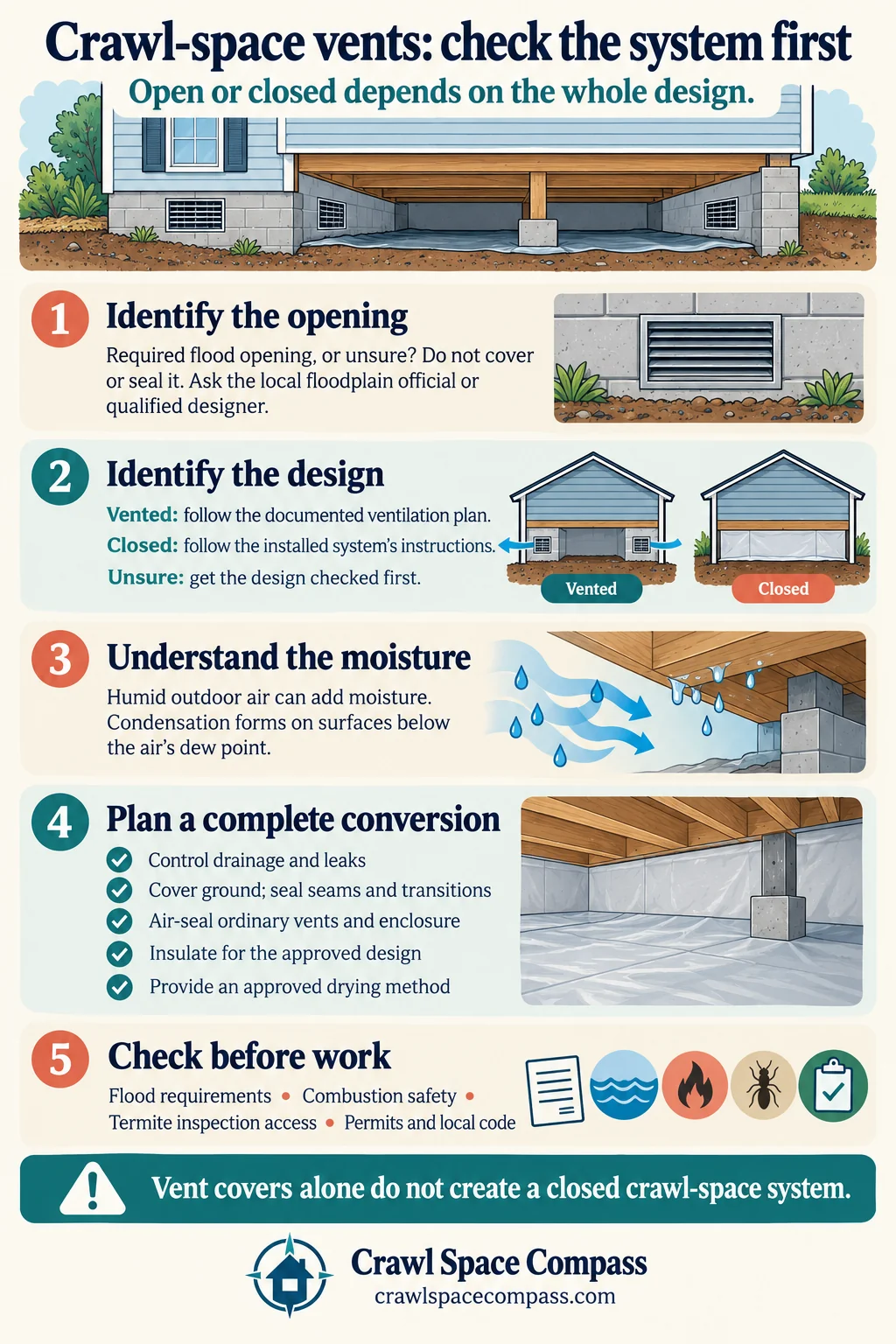
Read the vent-system visual guide as text
- Identify the opening. If it is a required flood opening, or you are unsure, do not cover or seal it. Ask the local floodplain official or a qualified designer. A flood opening serves a different purpose from ordinary ventilation.
- Identify the design. For a vented crawl, follow its documented ventilation plan. For a closed crawl, follow the installed system's operating instructions. If the design is unknown, have it checked before changing openings.
- Understand the moisture. Humid outdoor air can add moisture. Condensation can form when a surface is below the air's dew point.
- Plan a complete conversion. Control drainage and leaks; cover exposed ground and seal seams and transitions; air-seal ordinary vents and the enclosure; insulate for the approved design; and provide an approved drying method.
- Check before work. Review flood requirements, combustion safety, termite inspection access, permits and local code. Vent covers alone do not create a closed crawl-space system.
This visual summarizes the DOE, PNNL and National Weather Service guidance linked below. It is a planning aid, not installation instructions.
Why “open in summer, closed in winter” falls short
The seasonal rule assumes summer air will dry the crawl space. That can fail in humid weather. The U.S. Department of Energy explains that outdoor air can carry more moisture than the air already under the house. Bringing it into the crawl may add moisture instead of removing it. See DOE’s research overview of unvented, conditioned crawl spaces.
Winter vent covers also leave important questions unanswered: Where does moisture from the soil go? Is a plumbing leak active? Does equipment need combustion air? A calendar cannot answer those questions. Ask for an operating plan tied to the actual construction, climate and equipment rather than a recurring reminder to flip vent covers.
Dew point, in plain language
Dew point is the temperature at which moisture in air begins to condense. When warm, humid air reaches a cooler duct, pipe or other surface below that dew point, water can collect on the surface. It is the same basic process that makes a cold drinking glass wet. The National Weather Service’s dew-point explanation also shows why relative humidity alone can be misleading: its percentage changes with air temperature.
For example, comparing an outdoor RH reading with a crawl-space RH reading without their temperatures can lead to the wrong conclusion about which air is drier. Ask the inspector to consider air temperature, humidity and cold surfaces together. One reading at the access door is a starting point, not a moisture diagnosis. Our humidity monitoring guide explains how to record temperature and moisture trends together.
Vented and closed crawl spaces are different systems
| Question | Vented crawl space | Closed crawl space |
|---|---|---|
| How is drying addressed? | Outside-air ventilation is part of the design. | A specified conditioning, ventilation or dehumidification approach manages moisture. |
| What happens at ordinary vents? | They remain part of the ventilation system. | They are sealed as part of the conversion. |
| Does it still need water control? | Yes. Ventilation does not correct leaks or drainage. | Yes. Sealing does not correct leaks or drainage. |
PNNL’s unvented crawl-space guide describes ground vapor control, air sealing, insulation and a drying mechanism working together. Its example details are guidance, not a substitute for the requirements that apply to your project. Read our crawl space encapsulation overview before comparing a complete conversion with a vent-cover-only proposal.
Four checks before closing crawl space vents
- Flood openings: An opening may serve a flood-protection function. Flood vents allow floodwater to move through an enclosure and reduce unequal pressure. Do not cover, seal or obstruct them based on ordinary ventilation advice. Have the floodplain administrator or qualified designer identify what must remain functional. PNNL’s flood-resistant foundation guide explains this separate purpose.
- Combustion equipment: A fuel-burning furnace or water heater may draw combustion air from the surrounding space. A qualified HVAC professional should evaluate air supply, venting and combustion safety before enclosure changes. Do not improvise duct connections or combustion-air openings.
- Termite inspection and service access: Ask the pest professional and contractor which inspection areas must remain visible and how equipment will be reached after the work. Covering every exposed surface can interfere with inspection.
- Existing hazards: Water, damaged wiring, deteriorated framing or unknown insulation can make entry unsafe. Arrange a qualified inspection rather than crawling in to experiment with vent covers.
The PNNL pre-retrofit assessment covers combustion, electrical, structural, pest and soil-gas concerns. Include those checks in the scope when they apply; a humidity-control proposal should not leave them unresolved.
A sensible sequence for a closed-crawl conversion
- Document the problem. Ask for photographs, moisture readings and an explanation of likely sources. Separate rain-related entry, plumbing leaks, ground vapor and condensation.
- Resolve liquid water and damage. Drainage, leaks and needed repairs belong ahead of enclosure work. Our water after rain guide explains the diagnostic starting points.
- Agree on the complete design. The written scope should identify the vapor barrier, seams and transitions, ordinary vent sealing, insulation, access door and drying method. Confirm permit and inspection requirements with the local authority.
- Install and verify. Request photographs of concealed details and documentation of equipment settings, drain routing and applicable safety tests.
- Check performance afterward. Agree on who reviews humidity trends and water entry after rain, when they will return, and what triggers a service call.
DOE’s vented-to-unvented checklist includes preparation, installation and commissioning. Use it to discuss the scope with a contractor; its listed dimensions and code references are not universal instructions for every home.
Questions worth putting in the quote
- What evidence shows that outside air, soil vapor or liquid water is the main issue here?
- What will replace the existing drying strategy when ordinary vents are sealed?
- Who will verify flood-opening, combustion, pest-inspection and local permit requirements?
- How will you demonstrate that the completed crawl is performing as intended?
- Which maintenance tasks and follow-up visits are included in the price?
Use our quote comparison guide to line up those answers. If you are looking locally, the North Carolina directory is a starting point for finding contractors to interview.
Keep a vent and drying-plan record
Ask the inspector or installer to leave one short record with the photos and quote. It should identify the existing crawl-space design, each opening's purpose, the proposed drying method and who confirmed safety or local requirements. Keep unanswered items visible:
- Openings: Which are ordinary air vents, which have a flood function, and which are still unidentified? Record who verified the distinction.
- Moisture: Which source does each proposed correction address? Keep drainage or leak repairs separate from ground-vapor and air-humidity control.
- Drying and safety: What keeps the converted crawl dry, and who checks combustion equipment and pest-inspection access?
- Handover: Which settings, drains and access areas need attention? Record the follow-up date, service contact and conditions that should trigger a call.
For example, a quote may list foam vent plugs and a liner but leave the drying method blank. Ask how humidity will be controlled after outside-air openings are sealed. That missing answer is a reason to clarify the design, not proof that a particular dehumidifier is required. Use the permit-check guide to keep local answers tied to the actual scope, and the termite coordination guide to discuss inspection access before surfaces are covered.
Frequently asked questions
Should crawl space vents be open in summer?
There is no universal seasonal answer. Humid summer air can worsen moisture conditions, but permanently closing a vented crawl requires a complete conversion plan. Follow the documented design and have persistent dampness investigated.
Should I close the vents when it rains?
Rain-related water entry needs a water-path diagnosis. Repeatedly changing vent positions will not address grading, downspout discharge or groundwater. Never obstruct a required flood opening.
Can I just install foam vent plugs?
Plugs address only one opening. Before permanent sealing, establish how ground vapor, liquid water and humidity will be controlled and whether the change affects equipment or required openings.
Does a closed crawl space always need a dehumidifier?
No. The drying method depends on the approved design and site conditions. Ask the designer to identify the method, operating settings and verification plan rather than assuming every sealed crawl uses the same equipment. Our dehumidifier guide explains equipment selection when that approach is specified.
What if my vented crawl space already stays dry?
Ask what measured problem a proposed conversion would solve. Review conditions across wet and humid periods, keep water-management measures maintained, and compare any proposed work with the documented need.