Fairfax County Crawl Spaces and Old Heating-Oil Tanks
Before a Fairfax County crawl-space project covers the ground, replaces insulation or moves equipment, account for any heating-oil tank and its connected piping. An old fill pipe, an unused tank or a petroleum odor calls for a different conversation from an ordinary moisture-control estimate. Establish what is present and who will assess it before the installation crew starts. This guide covers project planning for homes in Fairfax County, Virginia. It does not determine whether a particular tank is leaking, legally closed or subject to a specific permit. Keep people out of an area with an unexplained petroleum odor or suspected spill while you obtain appropriate guidance. Do not enter the crawl space to trace a line or investigate a tank yourself.Identify the old system from records first
Start with documents you already have: heating-service invoices, oil-delivery records, the home inspection, prior permit paperwork and any tank-closure report. A change to a heat pump does not, by itself, tell you what happened to the earlier oil system. Likewise, an old invoice marked “furnace removed” may say nothing about the tank, fill connection or buried piping. Prepare a simple equipment history for the people inspecting the property. Record the last known use, any previous supplier and the location described in old paperwork. Separate documented information from recollections. If a prior owner said the tank was removed but you have no report, write “removal reported; documentation unavailable” rather than presenting the removal as established. Ask the heating professional or tank specialist to identify the visible system and explain any uncertainty. Useful questions include whether a tank remains, whether the piping is still connected, which fill or vent fittings belong to it and whether existing records match what is found. Leave testing, opening, cutting and movement of tanks or lines to the appropriate professionals.Treat a suspected release as a separate work item
Virginia DEQ's home-heating-oil guidance identifies unexplained fuel loss, visible oil and petroleum vapors as reasons for prompt professional or agency attention. It directs owners to report oil releases to DEQ and describes the role of an environmental consultant in cleanup. The county's fuel-tank page also expressly directs heating-oil leak reports to DEQ. For Fairfax, the DEQ Northern Regional Office is the regional starting point. Its published contact is 703-583-3800, and its page links pollution reporting. Check that page for current contact options. DEQ's Pollution Response guidance directs significant incidents presenting an imminent threat to people or the environment to 911 and the Virginia Emergency Operations Center, 804-750-8845, rather than the online form. When requesting help, describe what was observed, where and when, without assigning a cause. Tell the responder whether excavation, pumping or liner installation is scheduled. If a consultant makes a report for you, ask for the reference number and a copy. A contractor's statement that they “will take care of it” is less useful than knowing which organization was contacted and what the next instruction is. Pause proposed work that would cover, disturb or remove the affected area until the responsible professionals explain the sequence. Ask who will assess the material, decide what can proceed and communicate the decision to the crawl-space crew. A new ground liner should not become the project's answer to an unresolved petroleum concern.Confirm the county's tank-specific review route
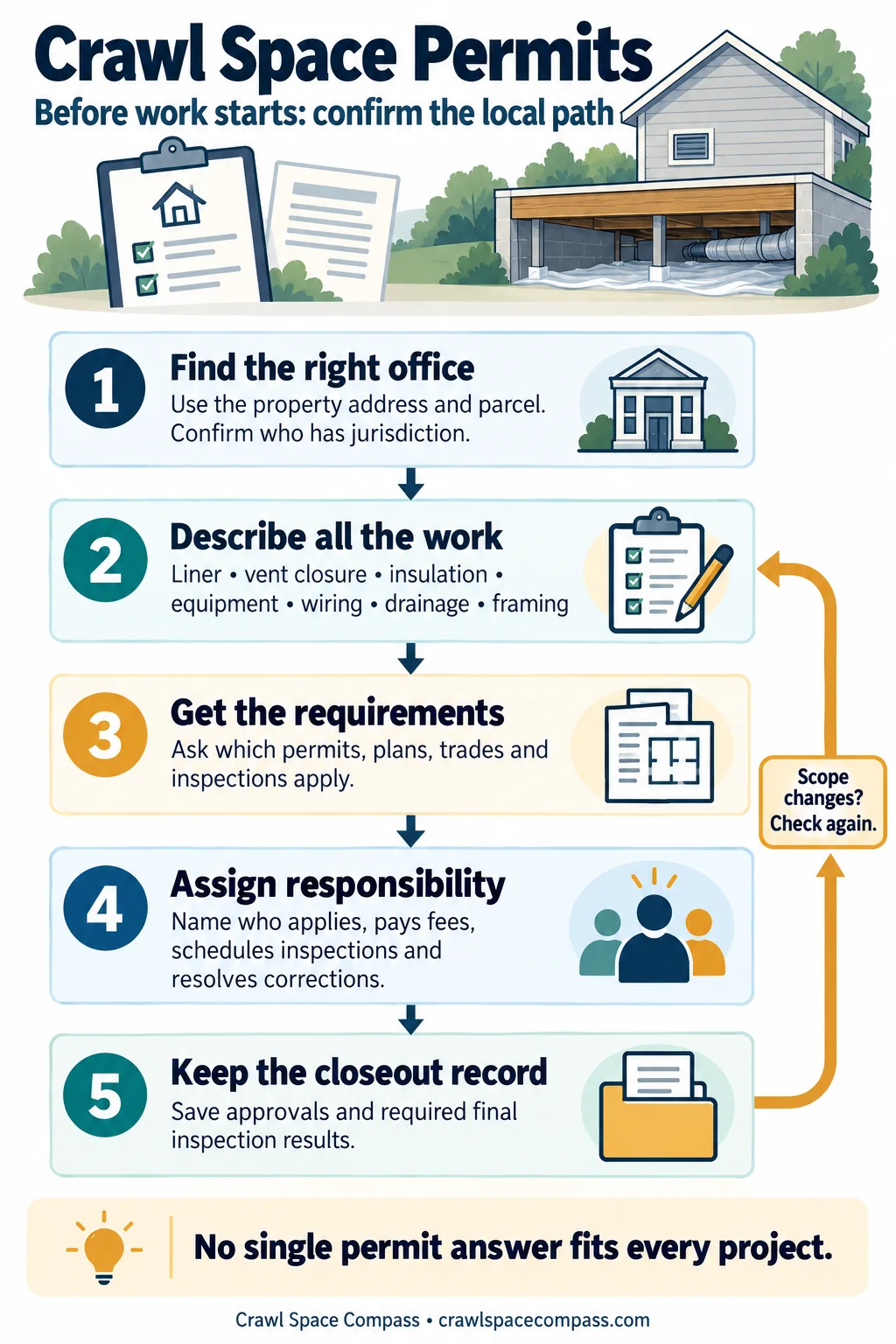
Fairfax County's Fuel Storage Tanks page separates installation from abandonment or removal and distinguishes fuel oil from propane, diesel and gasoline. Its residential fuel-oil row routes abandonment or removal through the Fire Prevention Division for a permit and inspection. A footnote lists an exception for an aboveground fuel-oil tank of 60 gallons or less. Have the county apply the table to the actual tank and proposed work; do not assume an exception from its appearance. The Office of the Fire Marshal publishes 703-246-4800 and [email protected] for its office. Send the property address, tank type and known size, whether it is aboveground or underground, and a plain description of the proposed activity. Ask which application, inspections and records are required. Confirm jurisdiction for the address, especially when a postal address might be confused with an incorporated city or town. DEQ's heating-oil guidance says an out-of-use tank needs proper closure and tells owners to check with the local building official about the acceptable method. This is a reason to ask for closure documentation even when the tank is empty. An empty tank, a disconnected furnace and a completed closure are different facts to verify.Separate the three scopes before comparing prices
A project can involve heating-system work, environmental assessment and ordinary crawl-space improvements. Put each in its own line of the proposal. The same firm might coordinate more than one part, but the paperwork should identify who performs the work and what evidence completes that stage.- Heating or tank work: Which equipment and lines are included, what remains in place, and who handles the required local review?
- Environmental work: Who assesses a suspected release, handles agency communication and supplies the investigation or cleanup records?
- Crawl-space work: What insulation, liner, drainage or access work can proceed, and what prerequisite findings does the installer need?
- Changes: Who stops the affected work if unexpected piping, staining or a tank is found, and how is a revised scope documented?
Keep a closeout file the next contractor can use
Before the liner or insulation obscures the work area, ask for dated photographs identifying where equipment or piping was removed and what remains. Keep the tank specialist's report, applicable inspection results, environmental correspondence and the crawl-space installer's final scope together. Record any remaining access requirements and unresolved questions.