
Fairfax County Crawl Space Encapsulation: Permit Planning
Before accepting a Fairfax County crawl space encapsulation quote, turn the package name into a written list of changes. A ground liner, closed vents, wall insulation, a new electrical circuit and foundation repairs raise different questions. The useful first decision is who will confirm the permit scope and inspection sequence before materials hide the work. This guide is for homeowners planning work in Fairfax County. Confirm the property's permitting jurisdiction first, especially when a mailing address and local government name differ. A contractor's description of a standard package is not a decision from the office reviewing your property.Which parts of the proposal need county review?
Fairfax County's Residential Miscellaneous permit guide specifically includes foundation repair, interior drain tile and interior or exterior waterproofing. Its general permit page explains that building, trade and land-disturbance permissions depend on the scope. Neither page makes the sales term “encapsulation” a complete project description. Ask the contractor to separate the proposed work into four groups:- Enclosure: ground cover, wall liner, vent closure, access-door changes and insulation.
- Water management: drain excavation, a sump basin, discharge piping and any exterior grading.
- Trades: wiring, an outlet or circuit, plumbing changes and connections to heating or cooling equipment.
- Repairs: damaged framing, piers, footings or foundation work.
Choose the insulation boundary before choosing products
A useful drawing shows whether the thermal boundary remains at the floor above the crawl space or moves to its perimeter walls. The Department of Energy's floor-insulation guidance explains the importance of contact between insulation and the air barrier when the floor separates the home from unconditioned space. Ask bidders to explain what happens to existing floor insulation, foundation vents and the access door. Have them identify the proposed insulation product, installation location and moisture-control approach. “We seal everything” does not explain how these components work together or which surfaces remain accessible. The county's Codes and Standards page says applications and plans beginning January 18, 2025 must meet the 2021 Virginia Uniform Statewide Building Code requirements. Older county checklists still appear in searches. Do not copy an insulation value or vent detail from an older document into the contract without having the designer and county confirm its applicability to the current project.Resolve existing problems before covering them
The Building America pre-retrofit assessment calls for identifying and correcting water sources before proceeding and assessing electrical hazards and combustion appliances. These are practical reasons to require an inspection record before a liner or insulation goes in. Request photographs labeled by location, a description of existing water entry, and a list of conditions that require another specialist. If fuel-burning equipment is present, ask who will evaluate combustion air and venting before vents or air paths are changed. Do not enter a wet crawl space to collect evidence around damaged wiring, questionable framing or unknown materials. Write down the pause points. For example, if removing loose insulation reveals damaged wood, who documents it, who evaluates it and who prices any additional work? Agree that concealed conditions will be explained with a revised scope before they are covered. This makes the decision reviewable even if several trades are involved.Put the permit and inspection handoff in the quote
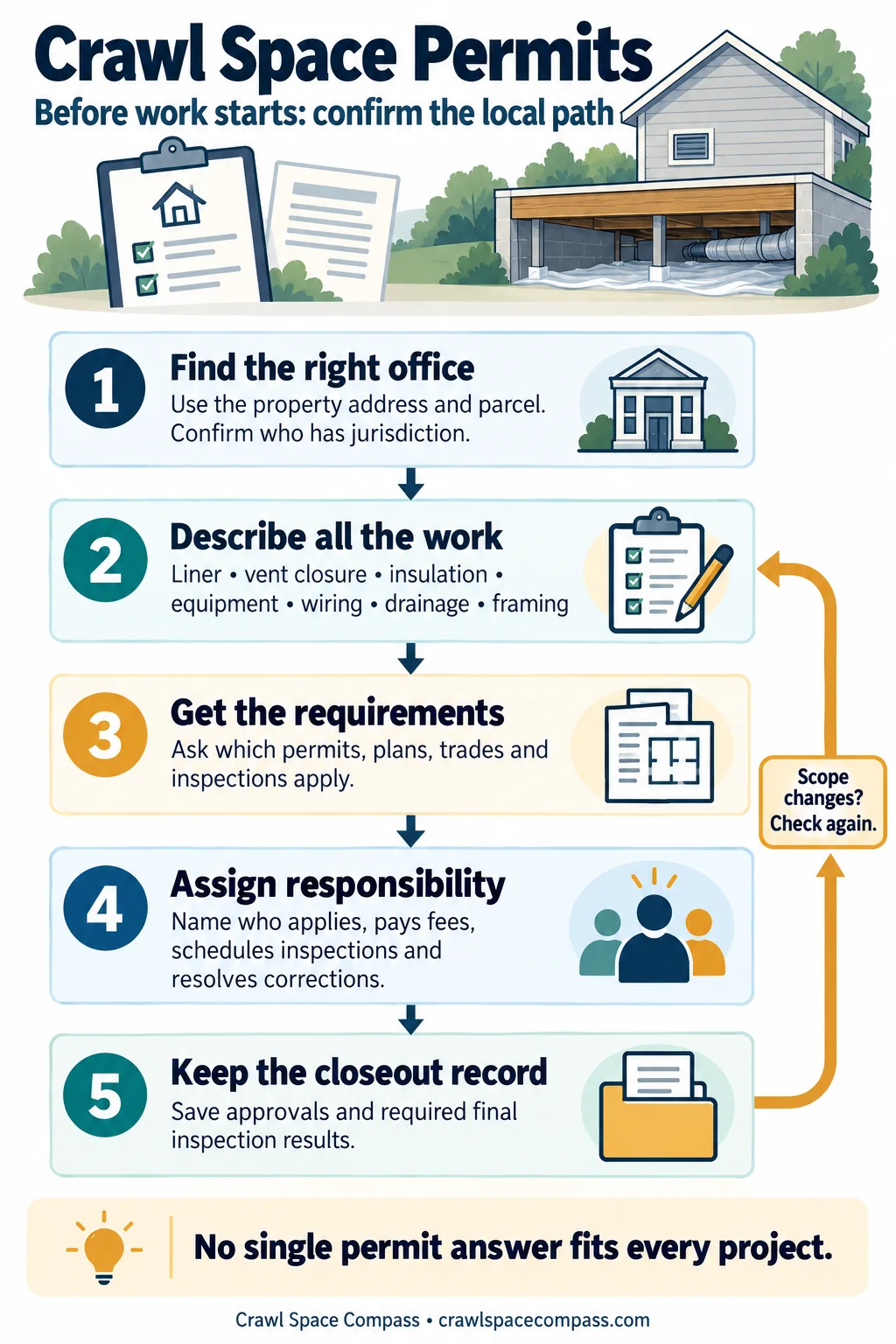
- Who will hold each required permit, and who pays application, revision and reinspection charges?
- Which trade contractors are included, and who coordinates their work and records?
- What must remain visible until the applicable inspection is complete?
- Who stops installation if the inspector requests a correction?
- Which permit numbers, approved documents and inspection results will the homeowner receive?
- What happens if the proposed assembly changes after review?