
Buying a Crawl-Space Home in Columbia, SC: CL-100 and Repair Quotes
Buying a home with a crawl space in Columbia, South Carolina? Gather the wood-infestation report, a documented crawl-space condition assessment and any repair estimates before treating the work as one package. Each document should identify what was inspected, what was found and what remains unresolved. A clean-looking liner, a short pest report and a contractor's encapsulation quote answer different questions. This guide helps Columbia-area buyers turn crawl-space findings into comparable repair scopes. It covers the South Carolina CL-100, local contractor service differences and the city/county checks that can affect repair planning. It does not determine whether a property should be purchased or what a lender or purchase contract will accept.Start with the actual CL-100 and its inspection limits
Clemson University's Official South Carolina Wood Infestation Report, Form CL-100, addresses visible evidence in accessible areas, including crawl spaces that permit entry. The form excludes hidden and inaccessible areas. It includes findings about wood-destroying organisms, visible wood damage and excessive moisture below the first main floor, along with a range of wood-moisture readings. The form states a 30-day validity period. Confirm the inspection date and your transaction's documentation schedule with the inspector and the professionals handling the purchase. Do this early enough to investigate a finding rather than scheduling every visit immediately before closing. Read both sides, attachments and exclusions. On a simple sketch of the house, mark each inaccessible bay, enclosed porch area, crawl-space addition or blocked opening. Ask what would be necessary for a qualified inspector to evaluate those areas. Arrange permission and suitable access through the owner; buyers should not crawl into standing water, damaged wiring or other unsafe conditions themselves.What a report finding can tell you to ask next
Clemson's guide to understanding wood-infestation reports explains that the report is one part of evaluating a home. It describes visible activity or damage at the inspection, while a qualified building expert evaluates the extent of damage and whether repairs are needed. Its fungi, decay and excessive-moisture inspection scope is limited to the structure below the first main floor.- Visible damaged wood: request photographs and the location of each affected member, then obtain the appropriate building evaluation and repair scope.
- Moisture noted: ask for the measurement locations and an explanation of the suspected source. Keep a leak repair, water-management work and a humidity-control upgrade identifiable in the estimate.
- Areas excluded: keep the question open until the inspection limitation is resolved or clearly understood. A repair price based only on the visible portion should state that limit.
- Treatment history: request the relevant treatment records and ask the pest company about any continuing inspection access or transfer paperwork.
Build one inspection packet before seeking repair prices
Give each bidding company the same packet, with the seller's permission where needed. Include the CL-100, the general home inspection's crawl-space pages, dated photographs, past repair invoices, equipment model numbers and the floor plan or sketch. Ask each company to distinguish its own observations from statements copied from a prior report. Then use these four questions to keep the inspections useful:- What did you inspect? Ask for the entry point, reachable areas and any places omitted because of clearance, obstructions or conditions.
- What is the physical finding? Request a photograph, location and measurement where relevant. “Needs encapsulation” describes proposed work rather than the original finding.
- What is the proposed correction? Have the company connect each task to the finding it is intended to address.
- Who can close the question? Identify whether the next step belongs to the pest inspector, plumber, crawl-space contractor, building professional or local permit office.
Three Columbia-area profiles to compare by inspection and repair scope
These are existing directory profiles and examples of different company-described services, rather than a ranking or a list of confirmed CL-100 issuers. Confirm service at the property's exact address and who will issue each document. A company's offer of a free repair estimate does not establish the scope of a separate inspection service.Crawlspace Medic of Columbia: photo-documented crawl-space assessment
The Crawlspace Medic of Columbia profile is a starting point when the purchase raises questions about framing, moisture and the existing ground covering. The company's Columbia page describes diagnostic inspections with a photo report, encapsulation, crawl-space repairs and water-management services. It lists Columbia, Lexington, Irmo, West Columbia, Cayce and other Midlands communities as service areas. Its stated boundary is useful: the page says the company does not install push or helical piers or perform slab leveling. Ask whether the finding concerns crawl-space framing or a different foundation condition that needs another specialist. Also ask whether the proposed report identifies every area the inspector could not reach.Crawl Space Brothers: compare moisture, drainage and support tasks separately
The Crawl Space Brothers profile links to a company whose Columbia office page lists encapsulation and moisture control, drainage and sump pumps, and structural repair or stabilization. Ask for a written repair plan and confirmation of service at the specific Columbia-area address. When requesting an estimate, ask for the amount and location of each repair, the observed reason for it and the work excluded. If the proposal includes both a drain and floor support, request separate explanations and prices so you can compare them with other bids.Modern Exterminating: coordinate pest and moisture questions
The Modern Exterminating profile offers another comparison when pest-service coordination matters. Its Columbia moisture-control page describes sump pumps, dehumidifiers and polyethylene ground barriers, alongside inspection and maintenance services. Ask whether the proposed work is a ground-barrier improvement or a broader closed-crawl-space project, and which surfaces it includes. If you need a CL-100, ask explicitly about that service, the issuing professional and the document you will receive. The moisture-control page alone does not establish those details.Coordinate pest inspection access before covering walls and framing
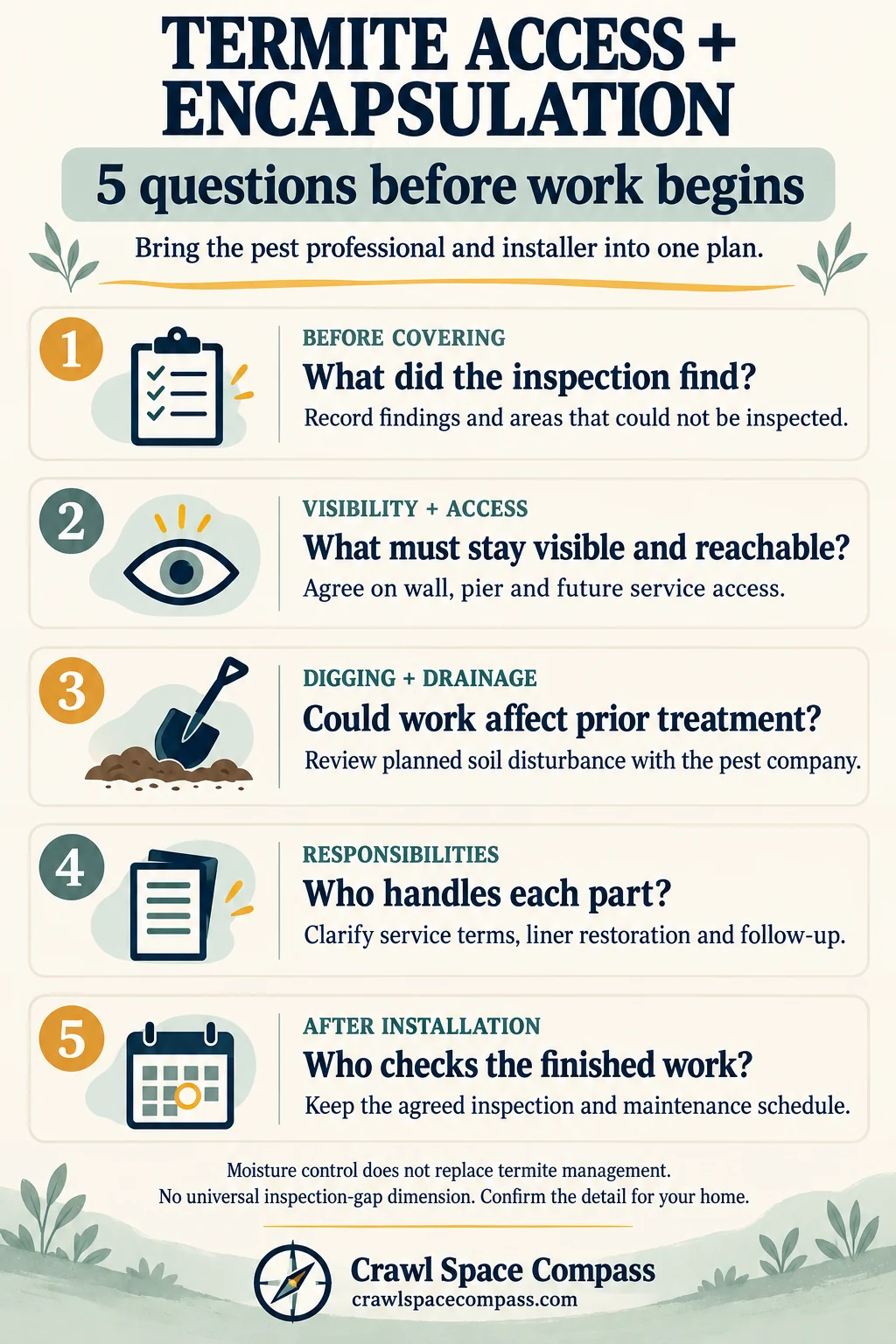
Confirm whether the repair address falls under city or county review
Keep the repair review separate from the property-inspection paperwork. Columbia's Development and Inspections office provides the City's residential permitting and inspection routes. Richland County and Lexington County have their own building-permit resources. Start with the property's jurisdiction; a Columbia mailing address or a company's Columbia service page does not settle which office should review the work. Describe the actual scope when asking for guidance: replacing joists, changing supports, installing equipment, adding electrical work, altering insulation or converting the crawl-space configuration. Ask which permits or inspections apply to that scope at that address, who will obtain them and what completion records you should receive. Avoid relying on a blanket statement about all encapsulation or all moisture-barrier jobs.A buyer's repair-quote checklist
Copy these items into a message to each bidder. Use the crawl-space quote comparison guide for a broader side-by-side review.- Inspection basis: report date, photographs, findings and inaccessible areas.
- Necessary evaluation: who will investigate unresolved damage or a suspected leak, and whether that evaluation is included.
- Itemized work: location and quantity of wood repairs, drainage, liner, insulation and equipment.
- Access: what stays reachable for pest inspections, plumbing repairs and equipment service.
- Completion evidence: before-and-after photographs, equipment information, relevant inspection records and the named person who evaluates completed repairs.
- Ongoing obligations: separate product and workmanship terms, service requirements and any transfer process supplied in writing.
- Open questions: explicit exclusions, allowances for concealed conditions and the process for approving additional work.